Toll Roads (Autopistas) in the Dominican Republic: Cash, Card, or Neither?
Toll Roads (Autopistas) in the Dominican Republic: Cash, Card, or Neither?
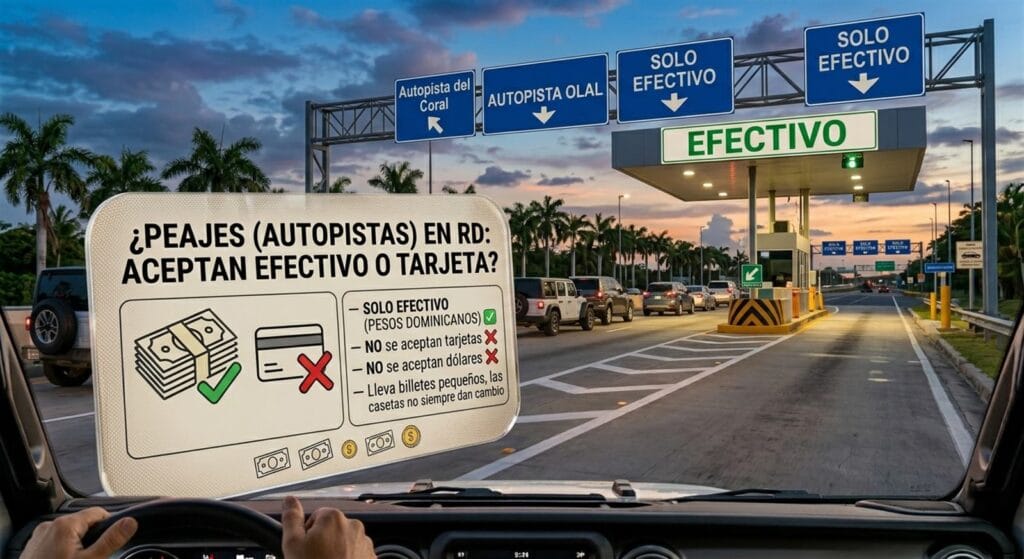
Quick answer: Cash only — Dominican toll booths accept Dominican pesos, not U.S. dollars or cards. Two toll highways serve eastern DR: Autopista del Coral (Punta Cana to La Romana) has 4 toll booths totaling roughly $5–7 USD one-way, and Autopista del Este/Highway 3 (La Romana to Santo Domingo) adds another $5–6 USD. Keep small-denomination pesos ready, since booths don’t always make change for large bills.
The Two Toll Highways You’ll Actually Use
Autopista del Coral connects Punta Cana to La Romana, the route most rental drivers use for day trips to Bayahibe, Altos de Chavón, or Casa de Campo. It has 4 toll booths along its length, together totaling approximately $5–7 USD (paid in pesos) for a one-way trip.
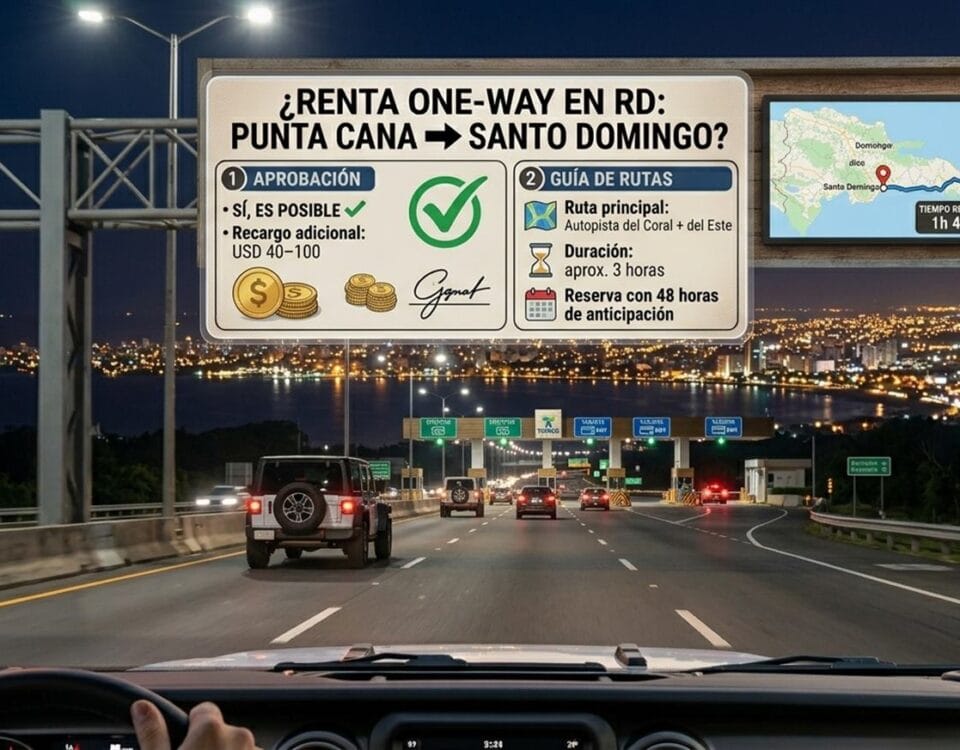
Autopista del Este, also referred to as Highway 3, continues the route from La Romana toward Santo Domingo, adding roughly $5–6 USD in further tolls. Combined, a full Punta Cana–Santo Domingo drive costs somewhere around $10–13 USD in tolls each way — worth budgeting into a one-way rental or a day trip to the capital.
Why Cash Only, and Why Pesos Specifically
Dominican toll booths are staffed, cash-collection points rather than card readers or automated transponder lanes (there’s no EZ-Pass equivalent widely used by rental cars here). That means every booth stop requires physical Dominican pesos — U.S. dollars aren’t accepted even though they’re commonly accepted elsewhere in Punta Cana’s tourist zone, and cards don’t work at the booth at all. This catches first-time visitors off guard more than almost any other detail of driving here, since dollars work nearly everywhere else in the resort corridor.
How to Prepare Before You Drive
- Exchange or withdraw pesos before your trip — an ATM at the airport or in your resort area, or a currency exchange counter, both work. Don’t rely on finding pesos at the toll booth itself.
- Keep small bills specifically — 100 and 200 peso notes are ideal; booths frequently can’t break a 1,000 peso note for a $2 toll, causing delays for you and the line behind you.
- Budget roughly 250–350 pesos for a one-way Punta Cana–La Romana trip on Autopista del Coral alone, more if continuing to Santo Domingo.
- Keep a small cash reserve in the car throughout your rental if you’re doing multiple day trips, rather than needing to plan a cash run before every drive.
What Happens If You Don’t Have Cash at the Booth
Toll booth staff generally won’t wave you through without payment — expect to be asked to pull aside or, in some cases, provided a short grace period to find cash, but this varies by booth and isn’t something to plan around. The straightforward fix is simply having pesos ready before you enter the highway, not figuring it out at the booth itself.
Are There Toll-Free Alternative Routes?
Non-toll local roads run roughly parallel to both autopistas, but they’re significantly slower — more traffic lights, town centers, and lower speed limits — and often add 45–60 minutes or more to a Punta Cana–La Romana or Punta Cana–Santo Domingo trip. For most visitors, the small toll cost is well worth the time saved on the divided highway, especially for a same-day round trip.
















Are there tolls when driving in Punta Cana?
Yes, on two highways serving eastern DR: Autopista del Coral (Punta Cana to La Romana, 4 booths, roughly $5–7 USD one-way) and Autopista del Este/Highway 3 (La Romana to Santo Domingo, roughly $5–6 USD).
Can I pay Dominican highway tolls with U.S. dollars or a card?
No. Toll booths accept Dominican pesos only, in cash — no dollars and no card payment. Exchange or withdraw pesos before your trip rather than relying on the booth.
How much cash should I carry for tolls on a Punta Cana to Santo Domingo drive?
Roughly 700–900 pesos ($10–13 USD equivalent) covers both toll highways one-way. Carry small bills — 100 and 200 peso notes — since booths often can’t break larger notes.
Is there a toll-free route to avoid the autopistas?
Yes, parallel local roads exist, but they’re significantly slower — often adding 45–60 minutes or more due to traffic lights and town centers. Most drivers find the small toll cost worth the time saved.