Is It Safe to Drive at Night in the Dominican Republic? What Punta Cana Visitors Should Know
Is It Safe to Drive at Night in the Dominican Republic? What Punta Cana Visitors Should Know
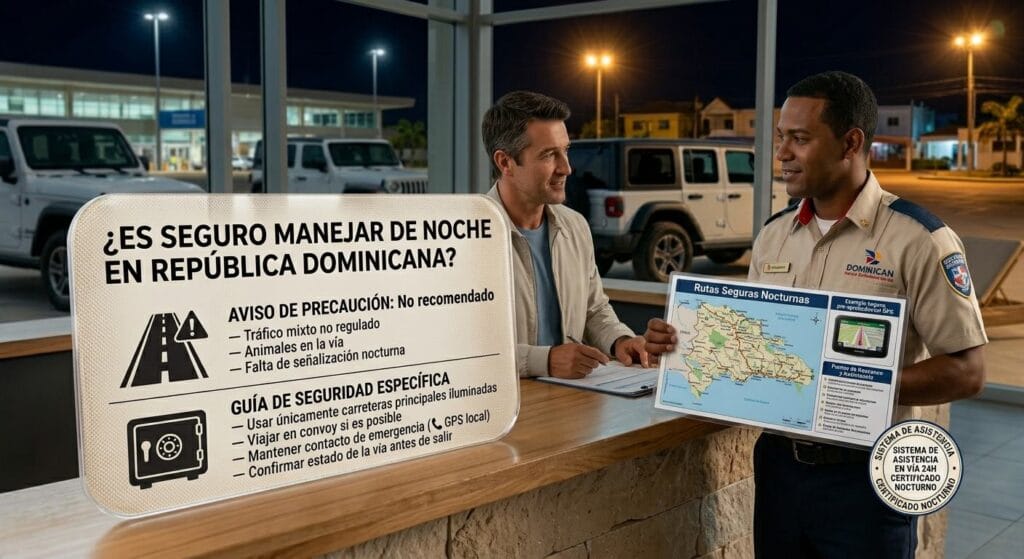
Quick answer: Yes, with real caveats. Driving after dark on Punta Cana’s main tourist roads — Boulevard Turístico del Este, Autopista del Coral, and the airport access roads — is generally safe; they’re paved, marked, and patrolled. The risk goes up outside the resort corridor, where lighting is limited, motoconchos (motorcycle taxis) weave unpredictably, and unmarked speed bumps and potholes are harder to spot. Most incidents involve aggressive driving or driving under the influence — both fully within your control.
The Roads Where Night Driving Is Straightforward
If your night driving stays within the Punta Cana–Bávaro–Cap Cana tourist corridor, you’re on well-lit, well-maintained roads used constantly by tour buses, resort shuttles, and rental cars after dark:
- Boulevard Turístico del Este — the main artery connecting the resort zone, lit and patrolled, with clear lane markings.
- Autopista del Coral — the toll highway toward La Romana, a divided highway with reflective markers.
- Airport access roads — heavily used and well-maintained given constant flight traffic.
These are the roads most visitors actually drive on for dinner reservations, airport runs, or getting back from an evening excursion — and they don’t require any special night-driving skill beyond normal caution.
Where Night Driving Gets Genuinely Harder
The caution zones aren’t random — they’re specific and predictable:
Motoconchos. Motorcycle taxis operate everywhere, day and night, often without working taillights or reflective gear, and they weave between lanes and pass on the shoulder. At night they’re harder to spot until they’re close. Give extra following distance and check mirrors before any lane change.
Unmarked speed bumps. Many secondary roads use speed bumps (“policías acostados”) without warning paint or signage. In daylight you see them coming; at night, especially on unfamiliar roads, they can catch you off guard at speed. Slow down through any town or settlement, marked or not.
Potholes after rain. Tropical downpours are common and can open or fill potholes with water, making depth hard to judge in headlights. This is worse on secondary roads outside the main tourist corridor.
Limited lighting outside resort zones. Once you’re past the main tourist roads — heading toward smaller towns, back routes, or rural stretches — streetlights thin out fast. Headlights and reduced speed do the work that ambient lighting does in the resort zone.
The Real Cause of Most Incidents
It’s worth being direct about this: most driving incidents in the Dominican Republic, day or night, involve aggressive driving or driving under the influence — not the road conditions themselves. Both are entirely avoidable. Keep to a reasonable speed, don’t drink and drive (enforcement has increased in recent years, and penalties are serious), and drive defensively around other vehicles rather than assertively.
Practical Night-Driving Tips for Punta Cana
- Stick to the main tourist roads (Boulevard Turístico del Este, Autopista del Coral) whenever your route allows it, even if it’s not the absolute shortest path.
- Reduce speed through any town, resort entrance, or unlit stretch — bumps and pedestrians are more common near settlements.
- Keep headlights on and use high beams only on genuinely empty stretches; oncoming motoconchos and pedestrians are common.
- Avoid driving after drinking — this applies everywhere, but enforcement and road conditions make it a firmer rule here.
- If you’re unfamiliar with a route, consider making the trip once in daylight first, especially for airport runs or restaurant reservations.
When to Just Use a Taxi Instead
If your evening plan is a single restaurant a few minutes from your resort with no other driving planned, a taxi or resort shuttle can be simpler than parking logistics at night. Where a rental car earns its keep is flexibility — late airport pickups, multi-stop evenings, or trips outside the immediate resort zone where taxis are scarce or expensive.

























Is it safe to drive at night in Punta Cana?
Yes, on the main tourist roads — Boulevard Turístico del Este, Autopista del Coral, and airport access roads — which are lit, marked, and patrolled. Caution increases outside the resort corridor, where lighting is limited and hazards like unmarked speed bumps are harder to see.
What are the biggest night-driving hazards in the Dominican Republic?
Motoconchos weaving in traffic without reliable lights, unmarked speed bumps in towns, potholes after rain, and reduced lighting outside the tourist zone. Most serious incidents involve aggressive driving or driving under the influence rather than road conditions alone.
Should I avoid driving at night in Punta Cana altogether?
Not necessarily. If you stay on the main tourist roads and drive at a reasonable speed, night driving in the resort corridor is routine. For trips into smaller towns or rural areas, extra caution and slower speeds are worth it.
Are motoconchos a real hazard when driving at night?
Yes. Motorcycle taxis operate constantly, often without working taillights, and weave between lanes or pass on the shoulder. Give extra following distance and check mirrors carefully before changing lanes, especially after dark.